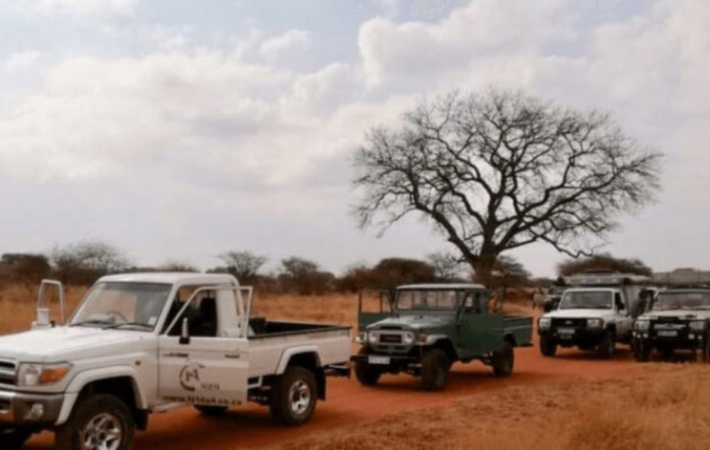
South Africa’s first custom electric game drive 4×4 vehicles have been released into the wild!
After automotive pioneers opened the doors to electric vehicles, several others joined the race to produce EVs, aiming to reduce operating costs and apply new technologies to protect the environment. Thanks to their almost silent engines, electric safari vehicles have the potential to make eco-tourism more effective, allowing tourists and photographers to move closer to animals.
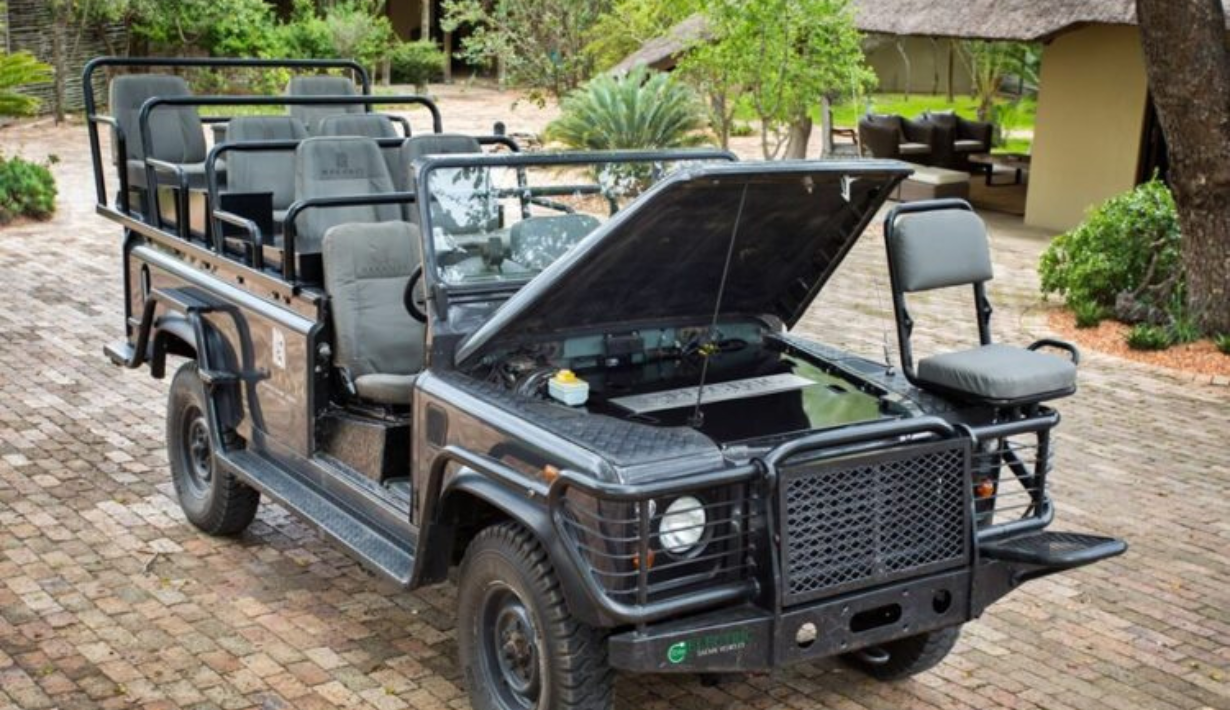
Some game reserves have already introduced custom electric game-drive vehicles to offer a zero-emission and sustainable (and quiet) safari experience, and others will soon follow suit. In the case of the Cheetah Plains Private Game Reserve, their vehicles were rebuilt from diesel-powered 4×4 models. Cliff Barker of Barker Performance Products was involved in the development of these electric safari vehicles. Despite Barker’s extensive experience in conversions, electrical conversion is a relatively new field, and he had to face several challenges. Not only did the vehicles need enough acceleration and speed to get out of the way of an angry mammal, but they also had to operate in conditions including uneven surfaces, steep slopes, high temperatures, dust, and moisture. Cliff studied the concept and ran calculations based on the expected weight of the vehicle, minimum range, and required performance before determining the specifications for the electric drivetrain.
Electric motors, batteries, inverters, and other components had to be sourced from abroad. To make maintenance easier, much of the standard 4×4 powertrain had to be retained, including the gearbox, transfer case, prop shafts, and axles, along with their original ratios. An adapter plate and supporting brackets were used to integrate the electric motor while keeping the original mounts intact.
A reduction gear ratio of 3.0:1 was required. Since the second gear ratio of the standard transmission was 2.46:1, an interim solution was implemented by locking the transmission in second gear, with plans to later design a single-speed 3.0:1 reduction gearbox. The same mounting points were used so that components remained interchangeable, allowing resale of the original engine and transmission to offset conversion costs.
For practical reasons and to lower the vehicle’s center of gravity, EV batteries are usually installed at floor level. Due to dust and water intrusion risks, this wasn’t possible, but the engine compartment was large enough to accommodate both inline and V8 engines, providing plenty of space for the electric motor. The battery pack is placed on a tray above the motor, with suitable cooling and protection. A 12V battery runs electrical systems such as wipers, lights, the inverter, and the battery charging point. A vacuum pump provides boost to the standard brake system.
The lithium battery pack contains 10 modules from a Tesla Model S battery, with 444 individual cylindrical cells per module, providing approximately 46 kWh of capacity. When fully charged, the vehicle can travel 80 km during wildlife viewing or 100 km on normal roads.
A typical load of passengers is lighter than the maximum payload for which the vehicle was originally designed, allowing the suspension to be softened. Modified leaf springs, additional coil springs, and specially tuned Koni shocks were added for comfort and stability.
Traditional benches were replaced with individual seats shaped for extra support. The seats are heated for early morning or evening game drives, and charging points, storage boxes for cameras, external mounts for cooler boxes, and a folding table built into the front bullbar were included. All steelwork is purpose-built, sandblasted, and powder-coated. The seat frames, cushions, and covers were manufactured in-house.
The electric-powered 4×4 development unit features subtle “Electric” branding along the flank, with only the unique dashboard and instrument panel hinting at a high-tech powertrain. These quiet, zero-emission vehicles have the potential to transform game drives into unforgettable, eco-friendly safari experiences.